Please note: Some references are specific to the history of Wheaton College, such as Wheaton's strong stance against slavery, their initial conflict with Secret Societies, the Beltonian literary/debate society, the founders quote about this era being a "martyr-age", Billy Graham being a prominent Alumnus, and the College Motto being "For Christ and His Kingdom".
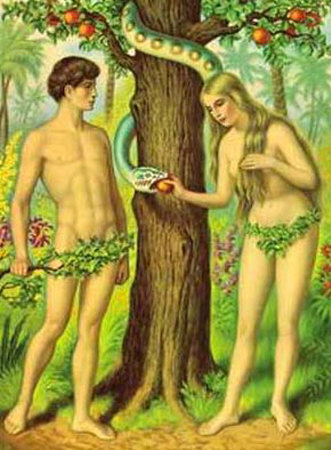
 Our ancestors were given the ability to eat either
from the Tree of Life or from the Tree of Knowledge of good and evil, but not both. In so doing God held out to them the
opportunity of expressing from their hearts either an evil choice or to
continue to make good choices. They
chose badly. Fast forward to today. In our society we live at a time of both increasing
opportunities for doing evil and increasing opportunities for doing good. As technologies, including Information
Technology (IT), increase the power available to mankind, we are able to
express what is in our hearts, either evil or good, in more powerful ways. Just as the new Information Technology of the
printing press was used to mass produce indulgences before it was used to mass
produce the Bible1, so today we
are misusing and neglecting the power of our information technologies to do
good.
Our ancestors were given the ability to eat either
from the Tree of Life or from the Tree of Knowledge of good and evil, but not both. In so doing God held out to them the
opportunity of expressing from their hearts either an evil choice or to
continue to make good choices. They
chose badly. Fast forward to today. In our society we live at a time of both increasing
opportunities for doing evil and increasing opportunities for doing good. As technologies, including Information
Technology (IT), increase the power available to mankind, we are able to
express what is in our hearts, either evil or good, in more powerful ways. Just as the new Information Technology of the
printing press was used to mass produce indulgences before it was used to mass
produce the Bible1, so today we
are misusing and neglecting the power of our information technologies to do
good.
Our generation has been provided a powerful gift in
the form of Information Technology but, on
an individual level, our sinful nature causes us to misuse or neglect the
benefits of that gift. Pride causes many
to care too much about their online image, sometimes neglecting the humility
needed to build close personal relationships.
Sloth causes many to use IT mostly for recreational reasons rather than being
diligent to equip themselves to advance the Kingdom of Christ. Greed contributes to causing some to take on
too many online friends, be on too many email lists, try to multi-task too many
items without good prioritization of their time and attention, and to neglect
the God given periods of rest from the pressures of our life. Impatience causes many to learn topics
superficially without taking the time to learn a topic in depth. And impatience may cause us to rush into
using a new technology without the proper preparation. Lack of love for truth and wisdom allows
opinion and anger to rule the day in many online conversations. But notice that the primary cause of all these
problems is the human heart, not the Information Technology. We don’t blame the tree of knowledge of good
and evil for the choices of our ancestors.
 On
a community level, our sinful natures can use Information
Technology to cause harm to the community.
We should glean wisdom from the Amish Christians, whose views concerning
technology have generally been misunderstood2. For example, many Amish use genetically
modified crops and pesticides because those technologies meet their
requirements for easier harvesting and greater yield. While we may disagree with some of their
decisions, the Amish are not against technology in general; rather they focus
on different requirements and longer term goals. In fact, the Amish may have the most experience
of any Christian group in critiquing technology to prevent harm and to promote
social virtue because they give a higher priority to avoiding risks to their
community. For example, they have a
requirement to avoid debt and surety and we would do well to do the same. They will not leave people who are trained in
older technologies behind. We should
learn from their example by not neglecting training, support and time for
people to adjust to new technologies.
They do not feel rushed to adopt a new technology until it is thoroughly
vetted. We should not neglect thoroughly
evaluating technologies and we should encourage talking with peer institutions that
have previous experience using each particular technology. The technologies they use must be manageable
and repairable over the long term. We
should thoroughly consider life-cycle maintenance costs and our degree of
dependence on individual vendors. They
do not want to become dependent on choices made by the larger society. They want to use what meets their
requirements the best, whether it be “low tech” or in some cases “high
tech”. They want to be in the world but
not of the world3 because sometimes society in general chooses badly.
On
a community level, our sinful natures can use Information
Technology to cause harm to the community.
We should glean wisdom from the Amish Christians, whose views concerning
technology have generally been misunderstood2. For example, many Amish use genetically
modified crops and pesticides because those technologies meet their
requirements for easier harvesting and greater yield. While we may disagree with some of their
decisions, the Amish are not against technology in general; rather they focus
on different requirements and longer term goals. In fact, the Amish may have the most experience
of any Christian group in critiquing technology to prevent harm and to promote
social virtue because they give a higher priority to avoiding risks to their
community. For example, they have a
requirement to avoid debt and surety and we would do well to do the same. They will not leave people who are trained in
older technologies behind. We should
learn from their example by not neglecting training, support and time for
people to adjust to new technologies.
They do not feel rushed to adopt a new technology until it is thoroughly
vetted. We should not neglect thoroughly
evaluating technologies and we should encourage talking with peer institutions that
have previous experience using each particular technology. The technologies they use must be manageable
and repairable over the long term. We
should thoroughly consider life-cycle maintenance costs and our degree of
dependence on individual vendors. They
do not want to become dependent on choices made by the larger society. They want to use what meets their
requirements the best, whether it be “low tech” or in some cases “high
tech”. They want to be in the world but
not of the world3 because sometimes society in general chooses badly. God has a history of disciplining societies that
continue to choose badly. Perhaps the
most likely form of judgment that we may see in our lifetimes is a potential coming economic judgment, a
natural result of the greed, impatience and pride of our society. We have gone well beyond wise capital
investment and insurance into the areas of unwise consumption debt and
surety. Proverbs says that the debtor becomes
a slave to the lender4. Our federal
government currently is in debt over $140,000 per household. If you include the present value of future
federal obligations that number rises to $640,000 per household. But if you look at the total debt throughout all
of U.S. society, including federal, state, local, commercial and individual debt,
the total number come out to be just over $1M per U.S household5. We believe we are rich as our credit limits
grow, but we are actually poor, enslaved debtors to (currently) generous masters. Proverbs says to flee surety6. The problems related to surety are today discussed
in fancier terms such as “counter party risk” or “moral hazard”. We have arguably institutionalized the
practice of surety in areas such as the FDIC insuring $8.9T in deposits and in the
international credit default swap market, currently valued at over $28T7. By neglecting the Biblical warnings concerning
debt and surety we may be setting ourselves up for economic judgment,
potentially causing a significant reduction in our purchasing power. It is unclear whether that may happen
tomorrow or after we retire, or whether it will happen suddenly or spread over
many years. But, whatever the case, prudence
demands that IT planning prepare for the days when our collective bills start
to become due.
God has a history of disciplining societies that
continue to choose badly. Perhaps the
most likely form of judgment that we may see in our lifetimes is a potential coming economic judgment, a
natural result of the greed, impatience and pride of our society. We have gone well beyond wise capital
investment and insurance into the areas of unwise consumption debt and
surety. Proverbs says that the debtor becomes
a slave to the lender4. Our federal
government currently is in debt over $140,000 per household. If you include the present value of future
federal obligations that number rises to $640,000 per household. But if you look at the total debt throughout all
of U.S. society, including federal, state, local, commercial and individual debt,
the total number come out to be just over $1M per U.S household5. We believe we are rich as our credit limits
grow, but we are actually poor, enslaved debtors to (currently) generous masters. Proverbs says to flee surety6. The problems related to surety are today discussed
in fancier terms such as “counter party risk” or “moral hazard”. We have arguably institutionalized the
practice of surety in areas such as the FDIC insuring $8.9T in deposits and in the
international credit default swap market, currently valued at over $28T7. By neglecting the Biblical warnings concerning
debt and surety we may be setting ourselves up for economic judgment,
potentially causing a significant reduction in our purchasing power. It is unclear whether that may happen
tomorrow or after we retire, or whether it will happen suddenly or spread over
many years. But, whatever the case, prudence
demands that IT planning prepare for the days when our collective bills start
to become due.
IT
can help reduce college costs and/or increase productivity
through economies of scale, process optimization, better decision support, automation,
and greater use of free or low cost information resources. Also, through providing better mechanisms for
marketing, advancement, student recruitment and online sales IT can help increase college revenues.
 But the first
order of business for effective use of Information Technology is to answer our
Creator’s call to repentance and accept His forgiveness for our pride, greed,
impatience, sloth, lack of love for truth and wisdom, and other sins and
instead replace those motivations with humility, charity, patience, love of diligence,
love of truth and wisdom, as well as the other virtues. But if Information Technologies can be a
curse when following sinful desires, Information
Technology is a blessing when we work toward truth and the Kingdom of
Christ. Information Technology can help
us better determine and communicate truths and it can help break down the information
barriers between communities.
But the first
order of business for effective use of Information Technology is to answer our
Creator’s call to repentance and accept His forgiveness for our pride, greed,
impatience, sloth, lack of love for truth and wisdom, and other sins and
instead replace those motivations with humility, charity, patience, love of diligence,
love of truth and wisdom, as well as the other virtues. But if Information Technologies can be a
curse when following sinful desires, Information
Technology is a blessing when we work toward truth and the Kingdom of
Christ. Information Technology can help
us better determine and communicate truths and it can help break down the information
barriers between communities. Christian colleges
need to understand the full nature of information technology, since education itself, in its broadest sense, is
a form of Information Technology. It
is no accident that the three major components of information technology, storage, processing and networking,
correlate well with three leading educational philosophies: instructivism (transferring stored
information from teacher to student), constructivism
(students “actively assemble” new information from their existing base
of information) and connectivism
(building connections to information).
Also, a liberal arts education is
the form of education where we motivate students to cache and index a wide variety of
information, including various skills and values, that educators predict will
be useful for them at a later time. That
is similar to how a computer caches the information and programs that it
predicts it will need most in the future.
So, in learning and promoting appropriate uses of information technology
we are actually learning and promoting the education process itself. In fact education theory and Information
Technology theory are both derived from the design of humanity. Cut off any part of the body except for the
brain and we can still be alive. So, humans
are information based creatures and our foundational brain functions of memory, thinking and perception/communication
are at the root of both education and Information Technology.
Christian colleges
need to understand the full nature of information technology, since education itself, in its broadest sense, is
a form of Information Technology. It
is no accident that the three major components of information technology, storage, processing and networking,
correlate well with three leading educational philosophies: instructivism (transferring stored
information from teacher to student), constructivism
(students “actively assemble” new information from their existing base
of information) and connectivism
(building connections to information).
Also, a liberal arts education is
the form of education where we motivate students to cache and index a wide variety of
information, including various skills and values, that educators predict will
be useful for them at a later time. That
is similar to how a computer caches the information and programs that it
predicts it will need most in the future.
So, in learning and promoting appropriate uses of information technology
we are actually learning and promoting the education process itself. In fact education theory and Information
Technology theory are both derived from the design of humanity. Cut off any part of the body except for the
brain and we can still be alive. So, humans
are information based creatures and our foundational brain functions of memory, thinking and perception/communication
are at the root of both education and Information Technology. An original goal of most Christian colleges was to offer an affordable education so that
anyone, regardless of economic class, could attend. We try to maintain some measure of
affordability and accessibility though grants and student work programs, but as
with most colleges in today’s society we have lost our ability to offer
education to our students without most of them taking on a significant amount
of debt. The same characteristics of
Information Technology that can help prepare us for economic downturns can help
provide a rebranded subset of a Christian education to a broader constituency
at a significantly reduced cost, which would in turn help promote, subsidize
and maintain the excellent core liberal arts curriculum without compromising
the quality of that core curriculum10. While maintaining our Liberal Arts
distinctives we should follow the lead of Harvard, Yale, Berkley, MIT, Hillsdale
and others11 in the area of opening up our course content to a
broader audience12.
An original goal of most Christian colleges was to offer an affordable education so that
anyone, regardless of economic class, could attend. We try to maintain some measure of
affordability and accessibility though grants and student work programs, but as
with most colleges in today’s society we have lost our ability to offer
education to our students without most of them taking on a significant amount
of debt. The same characteristics of
Information Technology that can help prepare us for economic downturns can help
provide a rebranded subset of a Christian education to a broader constituency
at a significantly reduced cost, which would in turn help promote, subsidize
and maintain the excellent core liberal arts curriculum without compromising
the quality of that core curriculum10. While maintaining our Liberal Arts
distinctives we should follow the lead of Harvard, Yale, Berkley, MIT, Hillsdale
and others11 in the area of opening up our course content to a
broader audience12. In fact, we need to break down any unnecessary barriers to accessing any of our information,
whether that be opening up course content to a broader constituency or
unlocking our administrative data by providing timely reports, dashboards and
alerts to a wide audience. By
definition, secret societies limit access to their information in an attempt to
increase their mystery and their majesty, but in contrast institutions of
education should promote access to their content as far and as wide as
possible. By unlocking course
information, motivated alumni and friends will have a method of self-improvement
provided by the college. Motivated
prospective students will have access to the information needed to be better
prepared to attend college. Current
students will have a tool to better determine which classes they should sign up
for. Faculty will be better able to
integrate and link information between courses and K-12 and graduate
institutions will be able to reference course information in their classes.
In fact, we need to break down any unnecessary barriers to accessing any of our information,
whether that be opening up course content to a broader constituency or
unlocking our administrative data by providing timely reports, dashboards and
alerts to a wide audience. By
definition, secret societies limit access to their information in an attempt to
increase their mystery and their majesty, but in contrast institutions of
education should promote access to their content as far and as wide as
possible. By unlocking course
information, motivated alumni and friends will have a method of self-improvement
provided by the college. Motivated
prospective students will have access to the information needed to be better
prepared to attend college. Current
students will have a tool to better determine which classes they should sign up
for. Faculty will be better able to
integrate and link information between courses and K-12 and graduate
institutions will be able to reference course information in their classes.
Information Technology can enable location
independence, providing support for the globalization
of a Christian education. We have
the ability to offer our services remotely to students traveling abroad and we
can easily bring in guest lecturers remotely, allowing students to see more
differing perspectives and promoting a
culture of discussion and debate as existed in the early college literary societies.
Using Information Technology we can offer a subset of our services to the world, without regard for race, nationality, gender or economic class. A Christian college’s ultimate goal is not limited to educating and graduating a few hundred seniors per year and launching those individuals to go out and affect society, but rather a summary of the ultimate goal of a Christian college is, as an educational institution, to affect society and the world for Christ and his Kingdom, using any means it has at its disposal. How can we say that we support social justice if we hide away from outsiders our most valuable resources, the knowledge and experience of the faculty, when it is in our power to make their knowledge widely available to people of all countries around the world?
Using Information Technology we can offer a subset of our services to the world, without regard for race, nationality, gender or economic class. A Christian college’s ultimate goal is not limited to educating and graduating a few hundred seniors per year and launching those individuals to go out and affect society, but rather a summary of the ultimate goal of a Christian college is, as an educational institution, to affect society and the world for Christ and his Kingdom, using any means it has at its disposal. How can we say that we support social justice if we hide away from outsiders our most valuable resources, the knowledge and experience of the faculty, when it is in our power to make their knowledge widely available to people of all countries around the world?
 |
| Replica of First Printing Press |
 |
| 95 Theses were Nailed Here |
References:
1 http://www.bl.uk/treasures/gutenberg/indulgences.html
Indulgences were printing on the printing press from the earliest days of the
printing press
2 http://www.kk.org/thetechnium/archives/2009/02/amish_hackers_a.php
A discussion of Amish views towards technology
3 http://www.biblegateway.com/passage/?search=john+17%3A15-16&version=NASB
“I do not ask You to take them out of the
world, but to keep them from the evil one. They are not of the world, even as I
am not of the world.”
4 http://www.biblegateway.com/passage/?search=Proverbs+22%3A7&version=NASB “The rich rules over the poor, and the
borrower becomes the lender’s slave.”
5 http://quickfacts.census.gov/qfd/states/00000.html for
number of households (114M households as of 2010)
http://www.usdebtclock.org/ for
current federal debt ($16,026B as of 10/2012)
http://usatoday30.usatoday.com/news/washington/2011-06-06-us-debt-chart-medicare-social-security_n.htm for
federal obligations, not including federal debt ($57,000B as of 6/2011)
http://www.usdebtclock.org/ for total
U.S. Societal debt, including federal debt and obligations ($58,587B as of
10/2012)
6 http://www.biblegateway.com/passage/?search=Proverbs%206:1-5&version=NASB “My son, if you have become surety for your
neighbor, Have given a pledge for a stranger, If you have been snared with the
words of your mouth, Have been caught with the words of your mouth, Do this
then, my son, and deliver yourself;
Since you have come into the hand of your neighbor, Go, humble yourself,
and importune your neighbor. Give no sleep to your eyes, Nor slumber to your
eyelids; Deliver yourself like a gazelle from the hunter’s hand And like a bird
from the hand of the fowler.”
7 http://www2.fdic.gov/sod/createStat.asp?System=SOD&Item=ddep
($8.9T in FDIC insured deposits as of 2012)
http://www.bis.org/statistics/otcder/dt1920a.pdf ($28T in Credit Default Swaps worldwide as of
12/2011)
10 http://open-ed.nitle.org/?page_id=36
“Higher education in 2012 seems to be on
the brink of disruption, given rising costs, emerging technologies, competition
from for-profits, global education, and other often-cited forces. Leaders of
elite liberal arts colleges express concern that their business model, which
typically involves high costs to deliver small, intimate face-to-face classes,
may not be sustainable.[1] Open education ranks among those disruptive forces
confronting colleges. For example, as Jon Breitenbucher (College of Wooster) argues,
MOOCs may threaten liberal arts colleges by offering “extremely low cost
options for obtaining skills” and replacing grades with more flexible, open
means of assessment.[2] However, Breintenbucher also suggests that liberal arts
institutions may be able to adapt to this challenge by adopting a “symbiotic
relationship with open education resources,” so that faculty focus more on
guiding learning than on delivering content.”
11 http://www.extension.harvard.edu/open-learning-initiative
Harvard Open Learning Initiative
http://oyc.yale.edu/
Open Yale courses
http://ocw.mit.edu/index.htm
MIT OpenCourseware
http://constitution.hillsdale.edu/
Hillsdale Open Constitution and History Courses
12 http://en.wikipedia.org/wiki/Massive_open_online_course
A description of Massive Open Online Courses (MOOCs)
13 http://www.catholic.org/national/national_story.php?id=30882&page=1
The Greatest Story Never Told: Modern Christian Martyrdom
http://christianity.about.com/od/denominations/p/christiantoday.htm
“An average of 159,960 Christians worldwide are martyred for their faith per
year.” (quoted from Gordon-Conwell Theological Seminary (2010) )
14 http://www.biblegateway.com/passage/?search=Esther+4%3A14&version=NASB "For if you remain silent at this time,
relief and deliverance will arise for the Jews from another place and you and
your father’s house will perish. And who knows whether you have not attained
royalty for such a time as this?”
Picture Source Attributions: (most are Creative Commons licensed)
Adam and Eve
Picture Source Attributions: (most are Creative Commons licensed)
Adam and Eve


 Arabic
 Korean
 Chinese
 Polish
 Croatian
 Portuguese
 Dutch
Dutch Romanian
 French
 Russian
 German
 Spanish
 Hebrew
 Thai
Thai Hindi
Hindi Turkish
 Italian
 Ukrainian
 Japanese
 Vietnamese